

Last updated: February 21, 2026 by the editorial team
Author's): Saif Ali Kheraj
Originally published in Towards Artificial Intelligence.
How AI agent architectures can compress decision cycles in regulated manufacturing with an actionable implementation plan using CrewAI.
Every pharmaceutical contract manufacturer faces the same operational bottleneck. Once a batch of a drug completes production and passes all laboratory tests, it goes into quarantine status not because of any defect in the drug, but because regulatory review has not yet occurred.
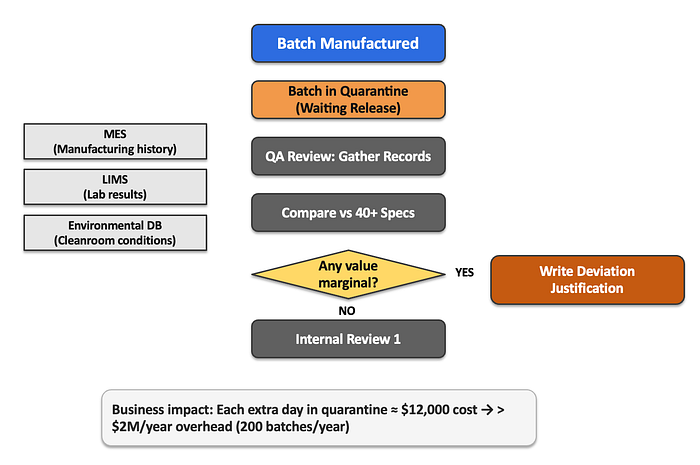
This case study details how XYZ Pharma implemented a multi-agent artificial intelligence system, reducing the quarantine period for drug batches from 14 days to 3 days while maintaining compliance with regulatory standards. It highlights traditional processes that lead to delays, such as the need for detailed review of manufacturing and laboratory data by quality assurance (QA) teams, and explores the innovative use of artificial intelligence technologies to improve decision-making and increase operational efficiency in the pharmaceutical manufacturing sector.
Read the entire blog for free on Medium.
Published via Towards AI
We create enterprise-class artificial intelligence. We will also teach you how to master it.
15 engineers. Over 100,000 students. Towards AI Academy teaches what will actually survive production.
Get started for free – no strings attached:
→ Agentic's 6-day AI Engineering email guide – one hands-on lesson per day
→ Agent Architecture Cheat Sheet – 3 years of architecture decisions in 6 pages
Our courses:
→ AI Engineering Certificate – over 90 lessons from project selection to implemented product. The most comprehensive practical LLM course on the market.
→ Agent Engineering Course – hands-on learning about production agent architectures, memory, routing, and evaluation platforms – built on real-world enterprise encounters.
→ Artificial Intelligence at work – Understand, evaluate and apply artificial intelligence to complex work tasks.
Note: The content of the article contains the views of the authors and not Towards AI.


